
Irrigation rust
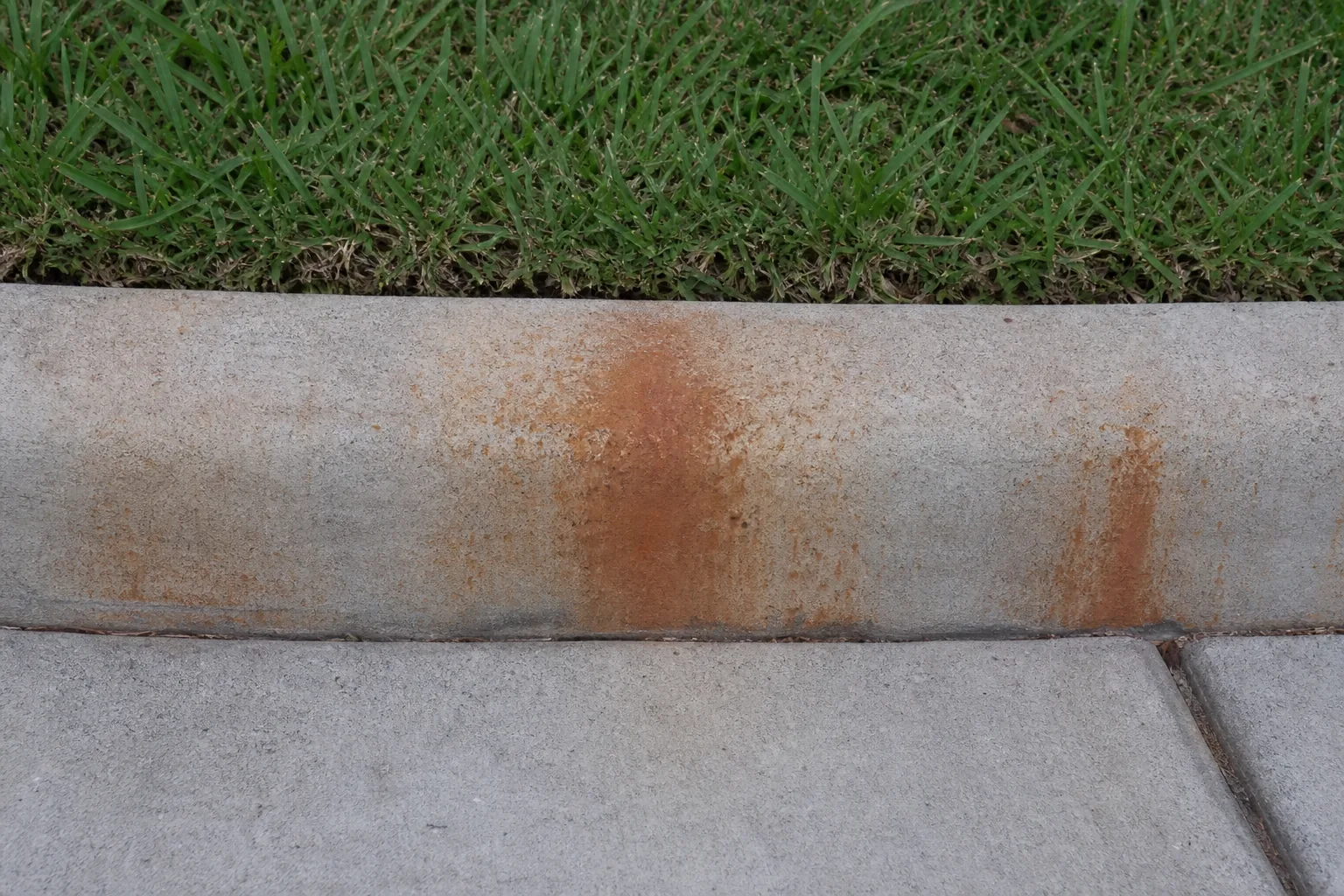
Sprinkler marks on walls, curbs and pavers.
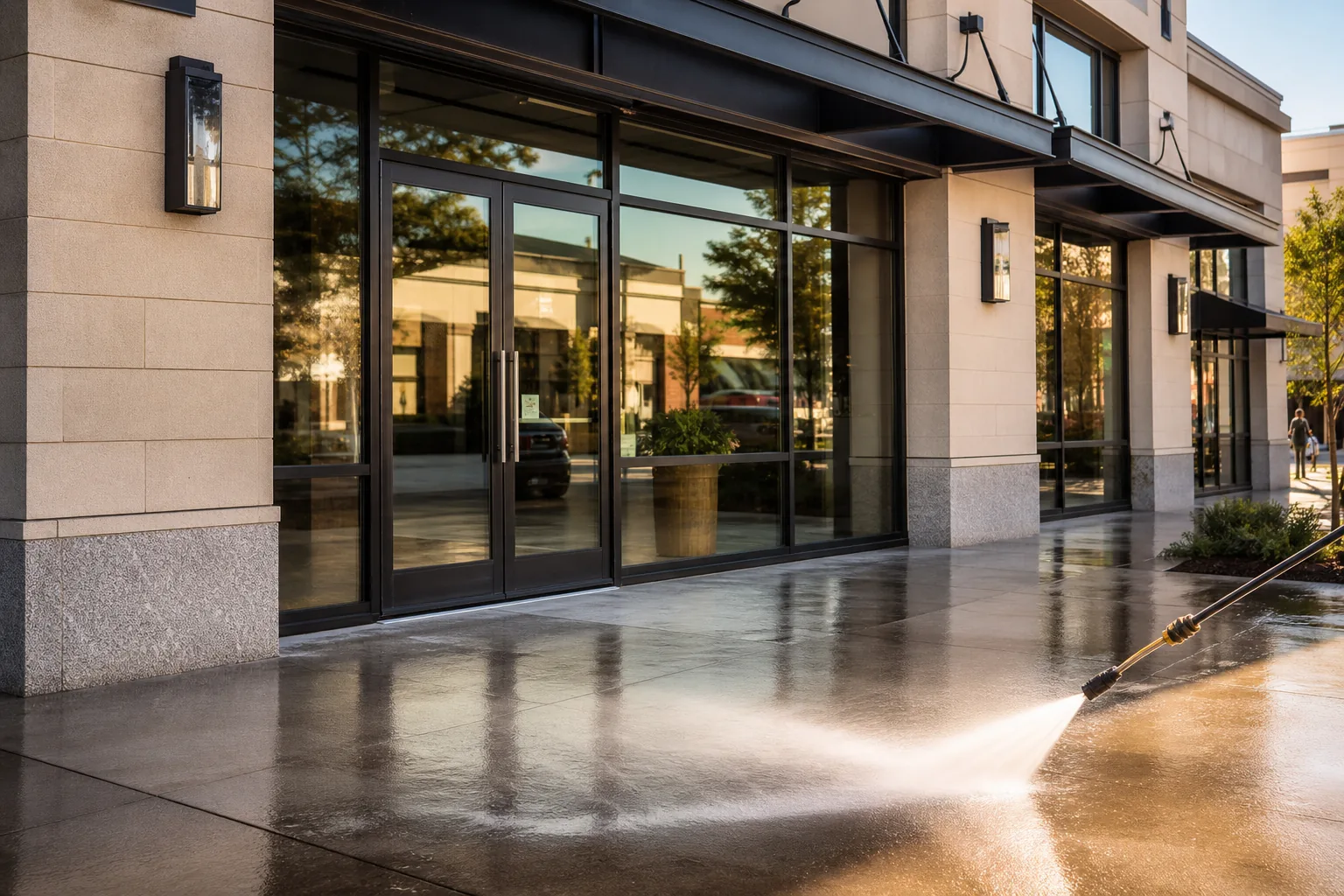
Targeted Exterior Stain Treatment
When ordinary washing leaves a rust shadow or oil spot, specialty treatment targets the stain—not more pressure.
When ordinary washing leaves a rust shadow, oil spot or paint mark behind, adding more pressure is usually the wrong move. Specialty stains need the right treatment for both the stain and the surface underneath it.
Jacksonville Washers provides targeted exterior cleaning for residential and commercial concrete, pavers, masonry, building surfaces and service areas. Results depend on stain age, porosity, coatings and previous attempts.
Send wide context plus tight shots of oil, rust, paint, fertilizer, or tannin marks—and note how old they are.
Stain types
Sprinkler marks on walls, curbs and pavers.
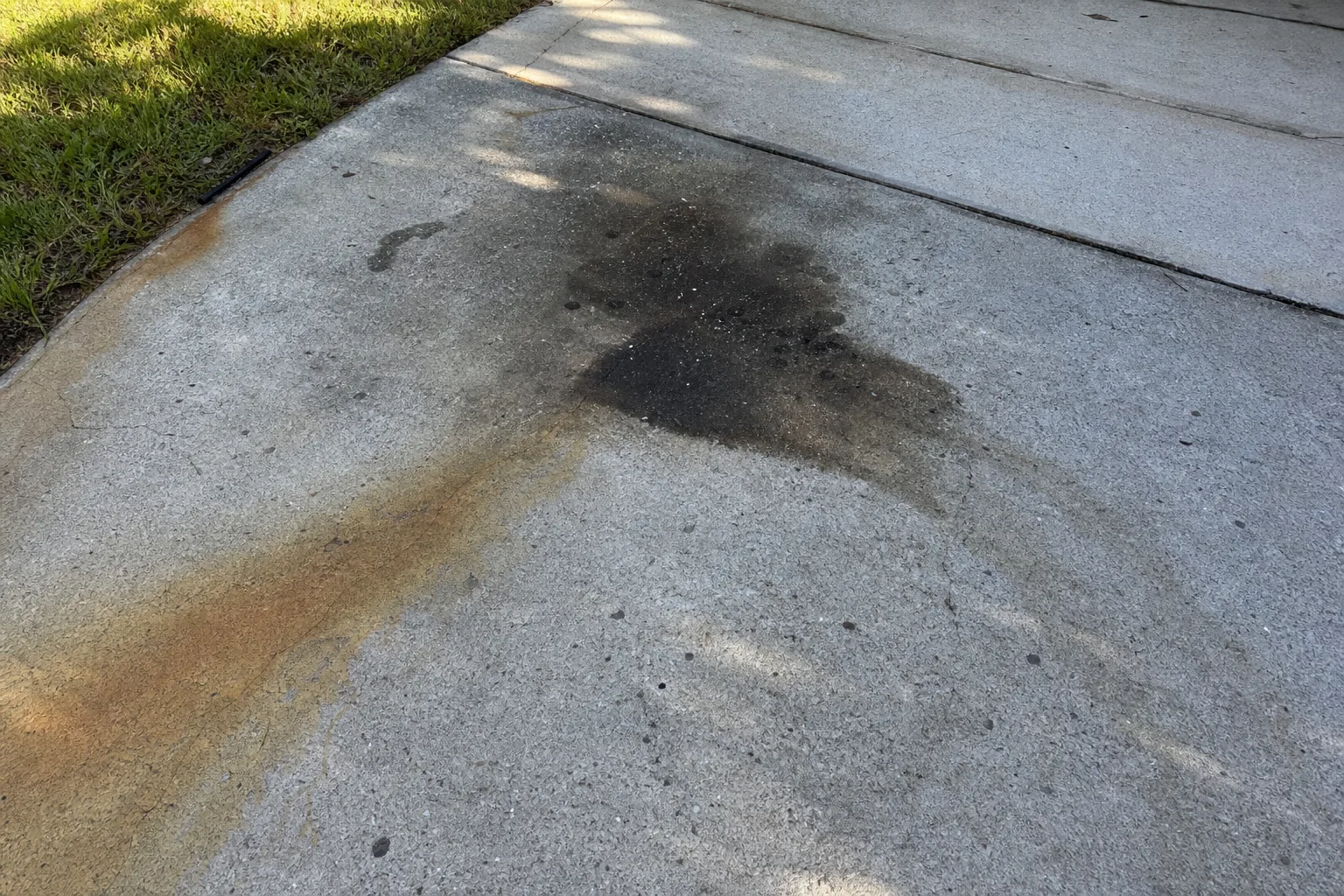
Vehicle spots on porous concrete.
Traffic film and rubber staining.
Heat and degreasers when appropriate.
Tested against the underlying finish.
Service-area residue and recurring buildup.
Pressure can remove loose surface material, but it cannot safely dissolve every stain. A narrow high-pressure pass may etch concrete, scar pavers, lift paint or leave a clean spot that looks brighter than the surrounding area. Specialty treatment uses chemistry, heat, dwell time, agitation or repeated light passes as appropriate.
A test area may be needed. Some stains improve but do not disappear, especially when they have penetrated porous concrete or reacted with a coating. Often pairs with concrete cleaning, paver care or commercial washing.
Orange or brown marks often appear where irrigation water hits walls, curbs, sidewalks, fences and pavers. Treatment depends on the source, surface and existing finish. Removing the stain without correcting the sprinkler direction or water source may lead to quick return.
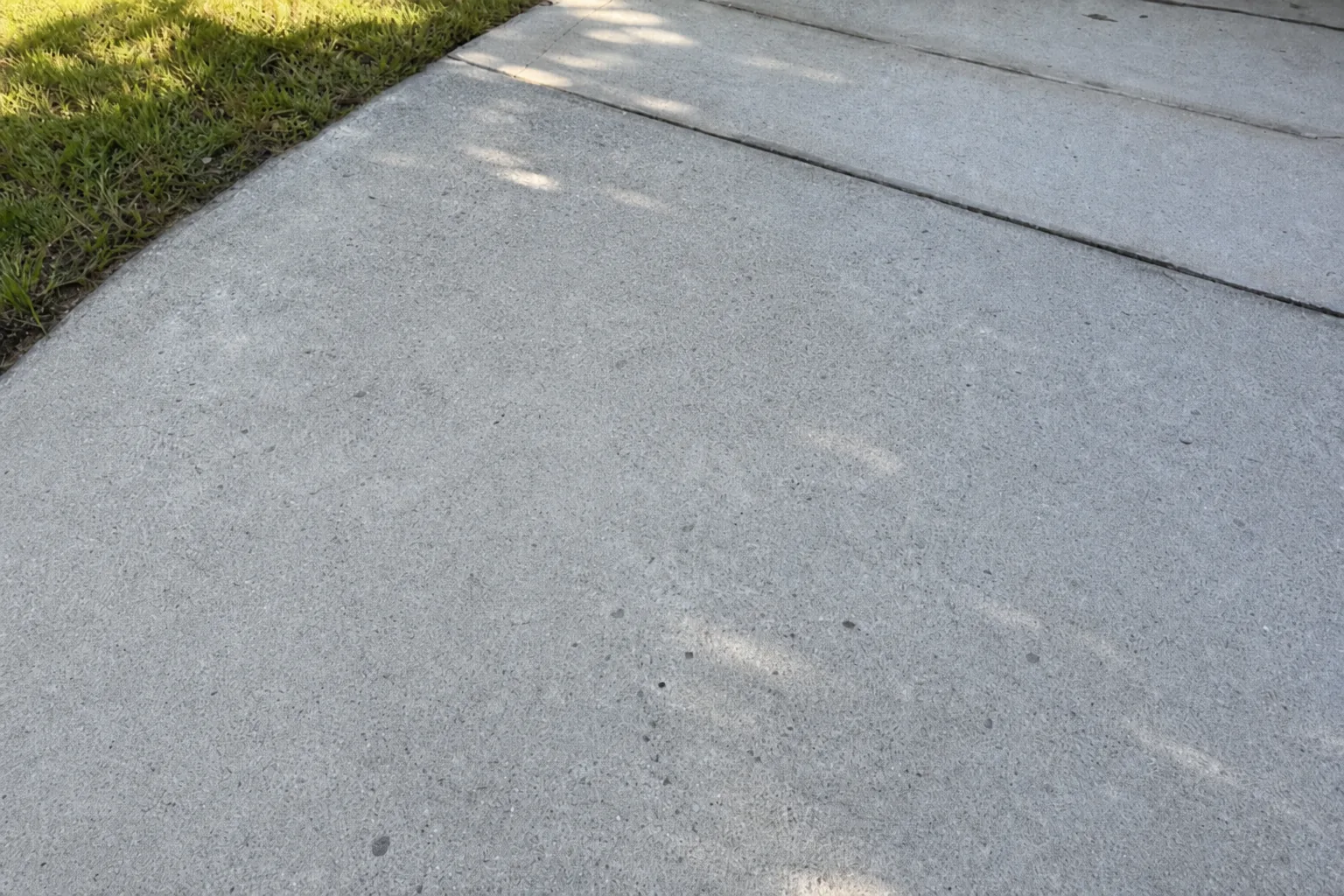
Fresh oil is usually easier to improve than old oil that has soaked deep into concrete. Degreaser, hot-water power washing and absorbent methods may be considered. Even after treatment, a shadow can remain in porous flatwork.
Restaurant service areas, drive-through lanes, fuel stations and dumpster pads may need recurring cleaning because new grease is introduced during normal operations.
Chewing gum often responds to heat and controlled removal. Graffiti treatment depends on paint type, age, wall material and whether the underlying surface is painted or sealed. The aim is to remove the mark without creating a larger damaged patch.
Before treatment, identify the stain source, age, surface and any coating. After treatment, compare the full area in normal light—not only a close-up wet section. Honest stain removal is about improvement and surface protection, not promising that every mark will vanish.
Visual proof
Results vary by porosity and age—photos set the right expectation before we treat.
Social proof
Irrigation rust down the driveway edge finally faded. They were honest that etched concrete will not polish back to new.
Transmission drip by the garage door had been ignored for years. Hot water and degreaser made it presentable again.
Tannin and leaf stains under the oak were the issue—not just dirt. Targeted treatment beat another generic wash.
Swap these placeholders for verified Google or Facebook reviews before launch.
Answers
Send wide context plus tight shots of oil, rust, paint, fertilizer, or tannin marks—and note how old they are.
Upload wide shots and close-ups on the contact form. Mention Specialty stain cleaning so we route your request correctly.
Open photo upload formOr email images to hello@jaxpropressurewash.com/